AI Agent POC to Production

From AI Agent POC to Production.

Your demo agent impressed the room — then stalled. We close the gap between a proof of concept and a production system: evals, edge cases, data access, latency and cost control at scale.

500+
Projects Delivered
200+
Engineers
2018
Founded
6–14 wks
Hardening Window
  • NDA signed on day one
  • Fixed-price quote within 48 hours
  • Senior engineers only, in your timezone
  • You own the code and IP

Get your custom project plan

Share your project details — a senior engineer responds within 4 hours.

NDA protected 24hr response Free consultation

Independently audited, certified and built to standards you can check

  • SOC 2 Type II certified
  • ISO/IEC 27001:2022 certified
  • AWS Cloud Operations Services Competency
  • AWS Security Competency

Taking an AI agent from POC to production means hardening five things the demo skipped: an evaluation suite that proves accuracy objectively, edge-case handling for messy real data, production-grade data access with scoped permissions, latency engineering for real user loads, and cost controls that keep token spend predictable at scale. The hardening typically takes 6–14 weeks on top of a working POC.

Founded 2018500+ Projects Delivered200+ In-House EngineersFixed-Price Hardening PlansNDA-First ContractsIP Assigned to YouWeekly Sprint DemosEdmonton & Chandigarh

Why AI Agent POCs Die Before Production

No Evals, No Proof

The POC demoed well on curated inputs, but nobody can say how accurate it is on real traffic. Without an evaluation suite, "is it ready?" has no objective answer — so leadership never signs off, and the project circles in demo-review loops.

Edge Cases Ate the Demo

Real data arrives malformed, incomplete and contradictory. The POC handled the happy path; production users find the agent looping on a half-empty CRM record, hallucinating a policy that was deprecated, or retrying a failed payment.

Data Access Was Faked

The demo read from a CSV export. Production needs OAuth-scoped API access, row-level permissions, rate-limit handling and audit logging — plumbing that often takes longer than the reasoning loop did.

The Other Two Killers: Latency and Cost

  • Latency at Real Load

    A five-step reasoning loop that felt fine in a demo takes 40 seconds under real conditions. Production agents need parallel tool calls, streaming, caching and iteration caps — or users abandon them.

  • Cost at Scale

    Ten POC runs a day hid token consumption that becomes a five-figure monthly bill at production volume. Model routing, semantic caching and per-task budgets have to be engineered before launch, not after the invoice.

  • No Human Escalation Path

    The demo never had to say "I don't know." Production agents need confidence thresholds, graceful refusal and warm handoff to a human with full context — or one bad autonomous action ends the program.

  • Compliance Review Arrived Late

    Security and legal see the agent for the first time after the demo. SOC 2 controls, data residency and PHI handling retrofitted late can force an architecture redo — scoped early, they are just requirements.

What the Hardening Path Looks Like

1–2 wks

Gap Assessment

Audit of the existing POC

2–4 wks

Eval Suite Build

Versioned regression tests

2–6 wks

Tool & Data Hardening

OAuth, retries, permissions

1–3 wks

Latency & Cost Pass

Routing, caching, budgets

6–14 wks

Total Window

POC to production launch

Weekly

Demos

Working builds, not slideware

The uncomfortable truth about POC-to-production work is that the reasoning loop — the part the demo showed off — is usually the only part that carries over unchanged. Everything around it gets rebuilt for production: the tool layer gains OAuth scopes, idempotent retries and rate-limit backpressure; the state store moves from in-memory to durable Postgres checkpoints; prompts get versioned and regression-tested against a real eval suite; and every irreversible action gets a human approval gate. We treat the POC as evidence the approach works, not as a codebase to ship — and we scope the hardening as a fixed-price plan with weekly working demos.

The Hardening Path

POC to Production, Step by Step.

A sequenced hardening program that turns a promising demo into a system you can put in front of customers — each phase scoped, priced and demoed separately.

Week 1–2

POC Audit & Gap Assessment

A code and architecture audit of your existing POC — framework, tool layer, state handling, prompts and data access — ending in a written gap assessment and a fixed-price hardening plan.

Code AuditArchitecture ReviewGap ReportFixed-Price Plan
Explore
Quality Gate

Evaluation Suite Development

A versioned set of real tasks with expected outcomes, run automatically on every change. The eval suite becomes your go/no-go gate — replacing "it feels better" with measured regressions and improvements.

DeepEvalRagasGolden DatasetsRegression Thresholds
Explore
Plumbing

Production Data & Tool Integration

OAuth-scoped tool layers, idempotent writes, rate-limit handling, row-level permissions and audit logging against your real CRM, ERP and internal APIs.

OAuth ScopesIdempotent RetriesRBACAudit Logging
Explore
Performance

Latency & Cost Engineering

Streaming, parallel tool calls, semantic caching, smaller-model routing and per-task token budgets — engineered against measured traces, tuned until the agent hits your latency and cost targets.

StreamingParallel ToolsModel RoutingToken Budgets
Explore
Safety

Human-in-the-Loop & Guardrails

Confidence thresholds, graceful refusal, approval gates on irreversible actions and warm human handoff with full context — using framework-native guardrails like the OpenAI Agents SDK input/output validators.

Approval GatesConfidence ThresholdsWarm HandoffGuardrails
Explore
Ship It

Production Hardening & Launch

Durable state, queue-based execution, tracing, alerting and a staged rollout with a canary cohort — then a runbook and handover so your team owns the system, not us.

Durable StateTracingCanary RolloutRunbook
Explore
Why Codazz for Hardening

We Ship Agents. Not Just Demos.

Every ai agent poc to production engagement is scoped, priced and staffed the same way — so these hold on every project, not just the showcase ones.

  • Evals Before Opinions

    Every hardening engagement starts with an evaluation suite, so go/no-go decisions are made on measured accuracy — not on how the demo felt in the meeting.

  • Framework-Native, Not Framework-Locked

    We harden POCs built on LangGraph, CrewAI, the OpenAI Agents SDK, AutoGen or raw API calls — keeping what works, rebuilding only what production actually requires.

  • You Own the System

    Code, prompts, eval suites and runbooks live in your repositories with full IP assignment. When we hand over, your team can operate and extend the agent without us.

Trusted by teams building with
OpenAIAnthropicLangGraphCrewAIAutoGenn8nLlamaIndexLangSmithLangfuseDeepEvalAWSGoogle CloudAzurePostgreSQLRedisTemporal
By the numbers

POC to Production Numbers That Actually Matter.

500+ProjectsDelivered since 2018
200+EngineersIn-house team
2018FoundedSoftware delivery
6–14 wksHardeningPOC to production
FixedPriceWritten hardening plan

How we deliver ai agent poc to production projects

One process, five stages, fixed milestones. You always know what is happening and what it costs.

  1. 01

    Discovery

    1–2 weeks

    We map the business problem, the users and the constraints, then agree what success looks like in numbers.

    Scope documentFixed-price quote
  2. 02

    Design & architecture

    2–4 weeks

    Flows, interface design and a clickable prototype, so the hard decisions are settled before engineering starts.

    Clickable prototypeTechnical architecture
  3. 03

    Build

    8–16 weeks

    Two-week sprints against a fixed scope. You see working software every fortnight, not a status report.

    Sprint demosAutomated tests
  4. 04

    Launch

    1–2 weeks

    Load testing, security review, migration and a rollout plan — with someone from the build team on call.

    Security reviewRollout plan
  5. 05

    Support & scale

    Ongoing

    Monitoring, iteration and a support SLA. Most clients keep building with us long after go-live.

    MonitoringSupport SLA
Advanced technologies

Production Hardening Tech Behind Every Launch.

We do not just build products — we engineer intelligent, connected, future-proof digital experiences.

  • Eval Suites

    Golden datasets with regression thresholds on every change

  • Run Tracing

    Every tool call and decision logged for postmortems

  • Durable State

    LangGraph Postgres checkpointers for resumable runs

  • Idempotent Retries

    Safe re-execution of failed tool calls without duplicates

  • HITL Gates

    Human approval interrupts inside the agent loop

  • Circuit Breakers

    Iteration caps and kill switches on runaway loops

  • Streaming UX

    Token streaming so users see progress, not spinners

  • Model Routing

    Small models for routine steps, frontier for hard ones

  • Semantic Cache

    Reuse answers for repeated or near-duplicate queries

  • Queue Execution

    Temporal, SQS or BullMQ for backpressure and recovery

  • Cost Attribution

    Per-workflow token spend dashboards and alerts

  • Canary Rollout

    Staged exposure with automatic rollback triggers

Technology stack

The Production Stack. From Demo to Durable.

Best-in-class tools chosen for performance, reliability, and long-term maintainability.

  • Agent Frameworks

    LangGraphCrewAIOpenAI Agents SDKAutoGenLlamaIndexn8n
  • Models

    GPT-4oGPT-4o miniClaude SonnetClaude HaikuGemini FlashLlama 3
  • Eval & Observability

    LangSmithLangfuseDeepEvalRagasOpenTelemetrySentry
  • Data & State

    PostgreSQLRedispgvectorPineconeS3
  • Execution

    TemporalBullMQAmazon SQSCeleryDockerKubernetes
  • Infrastructure

    AWSGoogle CloudAzureCloudflareModalVercel
Selection guide

Is Your POC Actually Ready to Harden?

Six questions that tell you whether your proof of concept is a foundation to build on — or a demo to learn from before rebuilding properly.

Can You Measure Accuracy?

If there is no eval set, the first hardening step is building one. Anything else is tuning by anecdote.

Does It Touch Real Systems?

A POC reading mock data proves the reasoning, not the integration. The tool layer is usually where hardening effort concentrates.

Is State Durable?

In-memory state dies on restart. Production agents need durable checkpoints — LangGraph Postgres checkpointers or an equivalent — so runs survive failures.

What Happens on Low Confidence?

If the answer is "it guesses," production needs confidence thresholds, refusal paths and human escalation before anything else ships.

Do You Know Cost Per Task?

Token consumption per completed task, at your target volume, decides whether the business case survives scale. Model it before launch.

Has Security Seen It?

SOC 2 scope, data residency and PHI handling are architecture inputs. A compliance review after build is a rework order, not a checkbox.

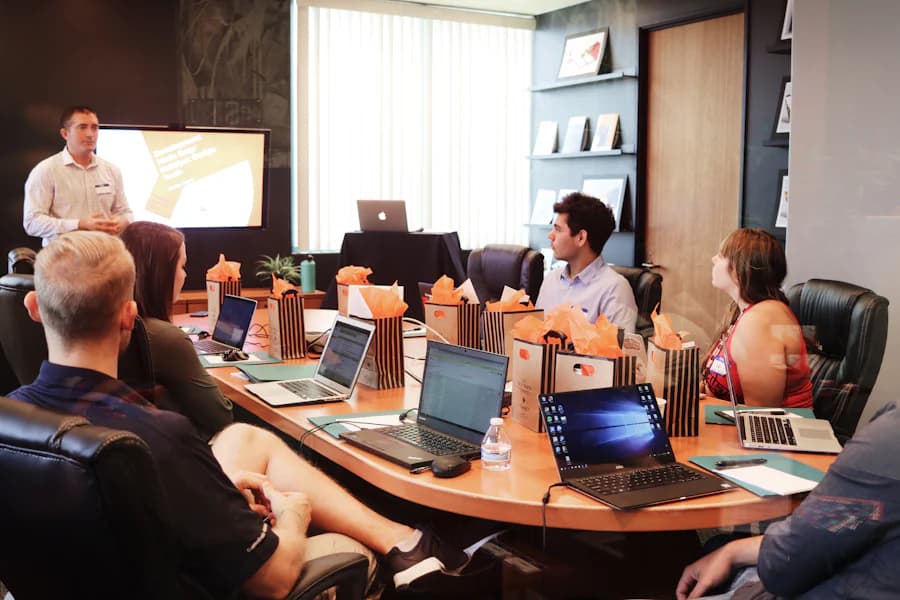
A project meeting in a glass-walled room
“Their team integrated real-time GPS tracking and route optimization into our fleet management system. Delivery times dropped 34% in the first month.”
David L.VP Engineering, Logistics Corp, Chicago
34%faster deliveries

Frequently asked questions

Common questions about taking an AI agent from proof of concept to production — timelines, evals, latency, cost at scale and hardening a POC built by another team.

Ask our team
  • POCs are built on clean sample data with the failure cases edited out. Production adds messy data, edge cases the demo never saw, missing API permissions, latency budgets, compliance review and a token bill that scales with usage. Without an evaluation suite there is no objective way to prove the agent is ready — so the project stalls in demo-review cycles.

Explore

Related services and the industries we serve most often.

Let’s build something worth keeping.

Tell us what you are trying to build. A senior engineer will come back within one working day with a scope, a timeline and a fixed price.