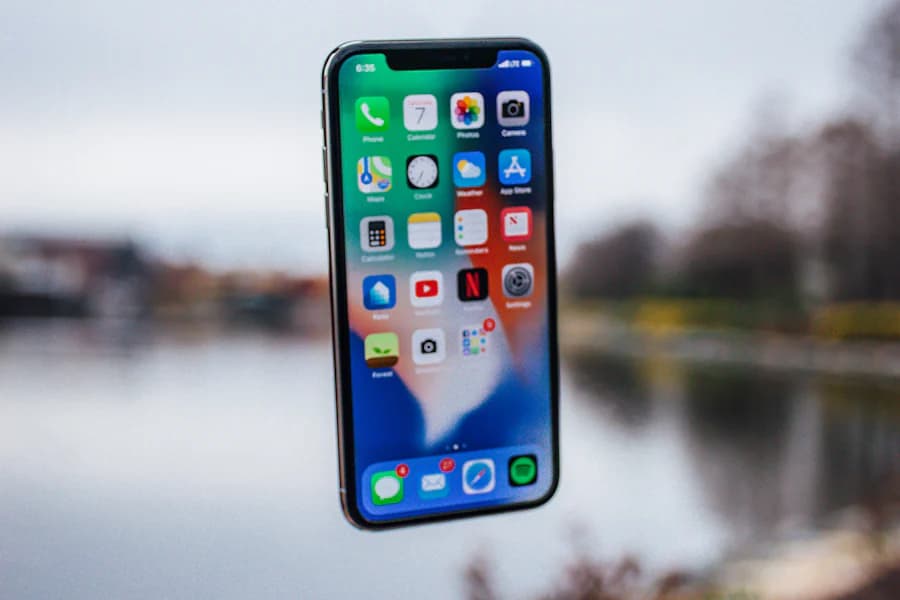
Native iOS Game Development
Swift and Metal for performance-critical titles where cross-platform overhead is unacceptable, plus full GameKit integration — Game Center leaderboards, achievements and multiplayer matchmaking.
Native iOS and Android game builds with platform-specific APIs, store optimization and dual-store launch management.
Share your project details — a senior engineer responds within 4 hours.
Independently audited, certified and built to standards you can check


iOS and Android game app development builds native Swift/Metal and Kotlin/Vulkan titles where platform performance ceilings matter, plus GameKit and Play Games Services integration. Codazz handles dual-store review, platform-specific APIs and certification — cross-platform where it fits, native where it counts.
Swift and Metal for performance-critical titles where cross-platform overhead is unacceptable, plus full GameKit integration — Game Center leaderboards, achievements and multiplayer matchmaking.
Kotlin and Vulkan for Android titles targeting the platform’s performance ceiling, with Play Games Services integration for cloud saves, achievements and Play-native multiplayer.
Unity for titles where a single codebase across both stores is the right economic call — most hyper-casual and mid-core games — with platform-specific native modules where the cross-platform layer falls short.
Apple and Google review guidelines are different documents with different failure modes. We manage both submission processes in parallel and know the specific rejection reasons each platform actually enforces.
Haptics, Dynamic Island and Live Activities on iOS; Play Games Services, adaptive icons and Android-specific widget support — the native touches that make a game feel platform-appropriate rather than ported.
Store listings, screenshots, preview videos and keyword optimization tuned separately for App Store Connect and Google Play Console — the algorithms and creative requirements are not interchangeable.
Our Work
200+ products shipped across fintech, healthcare, e-commerce, and SaaS — built to scale, designed to convert.

Web Design
A marketing site for an interior design studio, rebuilt on Next.js to load fast on mobile and convert visitors into enquiries.

Healthcare
A patient management platform handling scheduling, records and clinician-patient messaging for a healthcare provider.

E-Commerce
A fitness e-commerce storefront built on Next.js with Shopify as the commerce backend and Stripe handling payments.

Logistics
A delivery management platform with live vehicle tracking, route planning and customer-facing shipment status.

Logistics
A freight management platform for an established trucking operator, covering load tracking and job records.

SaaS
A multi-tenant SaaS platform that aggregates business reviews across sources and surfaces them in one dashboard.
We decide upfront which parts of the game are cross-platform and which need native implementation, based on your performance targets and platform-exclusive feature requirements — not decided by default and patched later.
iOS and Android builds progress together from the first playable milestone, so platform-specific bugs and performance gaps surface during development, not in a rushed platform-parity pass before launch.
Testing on real device matrices for both platforms — the iOS device spread is narrow but Metal-specific bugs still occur; the Android spread is wide, and performance QA has to cover genuinely low-end hardware.
App Store and Play Store submissions prepared and managed in parallel, including Apple’s editorial review conversations and Google’s phased rollout and pre-launch report cycle.
Crash monitoring, review response and update cadence tracked separately per store, because a platform-specific crash cluster on one store should never be masked by healthy aggregate numbers.
FinTech
Rebuilt a real-time trading engine for 100K+ users — sub-50ms latency and 99.99% uptime.
Read case studyHealthcare
A HIPAA-compliant patient platform that has handled 200K+ consultations and cut consultation time by 60%.
Read case studyE-Commerce
Redesigned checkout and storefront for 2M+ monthly visitors, tripling revenue with 1.2-second page loads.
Read case studyPick platform, complexity, features and design level to get a 2026 price range and timeline.
Open toolTurn a start date into a dated, phase-by-phase plan with your earliest and latest launch dates.
Open toolTurn your idea into a clear project brief, then copy it, download it as .md or send it to us.
Open toolCommon questions about iOS and Android game development — native versus cross-platform, cost, dual-store submission and porting.
Ask our teamMobile Game Development covers the full game — concept, core loop, monetization, LiveOps — typically built cross-platform in Unity. This service is the platform-native layer underneath: when a title needs Swift/Metal or Kotlin/Vulkan performance, platform-exclusive APIs, or dual-store submission and ASO handled as two genuinely separate processes rather than one. Most projects use both — Unity for the game, native modules where the platform demands it.
For the large majority of mobile games — hyper-casual through most mid-core titles — Unity cross-platform is the right call and native development would be over-engineering. Native earns its cost for titles pushing graphical or performance limits, needing deep platform-exclusive integration, or where App Store or Play Store featuring criteria specifically reward native-feeling polish. We give a direct recommendation rather than defaulting to the more expensive option.
Cross-platform cost is driven by feature depth, art scope, and the dual-store compliance work. Native development for one platform typically adds 30 to 50% over a cross-platform baseline; native for both platforms independently is scoped as close to two separate builds, which we model against the cross-platform alternative so you can see the trade-off in real numbers before deciding.
Apple’s review is manual and editorial with specific, sometimes subjective rejection patterns around monetization disclosure and content guidelines; Google’s is more automated with a phased rollout and a pre-launch report that surfaces device-specific crashes before full release. Treating them as one submission process is the most common reason indie launches get delayed on one store while the other sails through.
Yes, and the effort depends heavily on how the original was built — a Unity title ports far more cheaply than a fully native Swift/Metal game, which effectively requires a parallel native Android build rather than a port. We audit the existing codebase first and give you an honest estimate rather than assuming the cheap-port scenario applies.
Building both platforms in parallel from day one typically adds only two to four weeks over a single-platform timeline, since most of the work — game logic, content, art — is shared; the addition is platform-specific QA and two submission processes. Porting an already-shipped single-platform title afterward usually takes longer than building both together would have, which is why we recommend deciding the platform strategy before development starts, not after.
Tell us your performance targets and platform priorities. We will recommend native, cross-platform, or a mix — and scope it honestly.